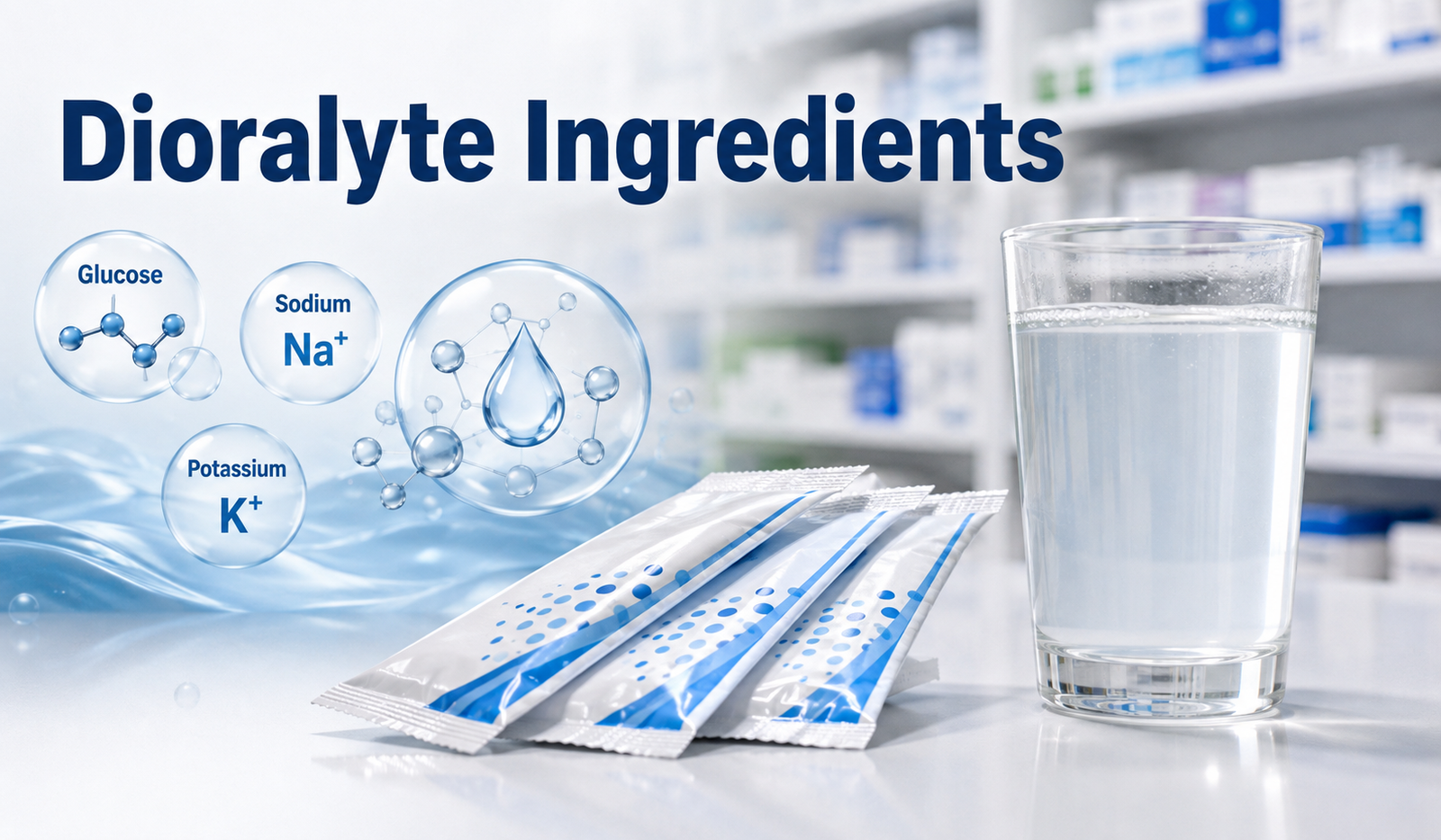
Dioralyte ingredients, including glucose and essential electrolytes, and learn how they help replace fluids and salts lost during dehydration. Dioralyte is an oral rehydration treatment available in sachet form. The contents are mixed with water to create a solution containing glucose and electrolytes. Different Dioralyte products can have different formulations, so checking the exact product packaging and leaflet is important rather than assuming every sachet contains identical ingredients.
What Are the Main Dioralyte Ingredients?
The standard Dioralyte Blackcurrant formulation contains glucose, sodium chloride, potassium chloride, and disodium hydrogen citrate as its active ingredients. These substances work together to provide glucose and electrolytes that can help replace substances lost from the body during fluid loss. The formulation also contains other ingredients used for flavour, sweetness, and manufacturing purposes.
For a standard Blackcurrant sachet, the stated active ingredients are 3.56 g of glucose, 0.47 g of sodium chloride, 0.30 g of potassium chloride, and 0.53 g of disodium hydrogen citrate per sachet. The exact formulation can vary between Dioralyte products, which is why the product name matters when discussing its ingredients.
Why Does Dioralyte Contain Glucose?
Glucose is not simply added to make the drink taste better. It has an important role in oral rehydration. The small intestine uses transport mechanisms involving glucose and sodium, helping sodium and water move from the digestive tract into the body. This is one reason oral rehydration solutions combine a measured amount of glucose with electrolytes.
The amount of glucose in an oral rehydration product therefore forms part of its carefully designed formulation. It is not the same thing as drinking a sugary beverage. Soft drinks, juices, and other sweet drinks do not necessarily provide the balanced combination of glucose and electrolytes found in an oral rehydration solution.
Sodium Chloride in Dioralyte
Sodium chloride is commonly known as salt. Sodium is an important electrolyte involved in maintaining fluid balance and supporting normal nerve and muscle function. When significant fluid is lost through diarrhoea or vomiting, sodium can be lost as well, so replacing fluids without considering electrolytes may not fully address the problem.
In standard Dioralyte Blackcurrant, sodium chloride contributes sodium to the rehydration solution. The formulation is designed to provide a measured quantity rather than the much larger or unpredictable amounts that could be found in ordinary foods or drinks.
Why Does Dioralyte Contain Potassium Chloride?
Potassium is another important electrolyte in the body. It contributes to normal muscle and nerve function and helps maintain the body’s internal fluid balance. Fluid loss can also result in potassium loss, particularly when diarrhoea is involved.
Dioralyte uses potassium chloride as a source of potassium. As with the other active ingredients, it is included in a specific amount as part of the overall oral rehydration formulation. This is one reason Dioralyte should be prepared according to the instructions rather than mixed with an arbitrary amount of water.
What Is Disodium Hydrogen Citrate?
Disodium hydrogen citrate may sound unfamiliar, but it has a specific purpose within the formulation. It provides citrate and sodium and contributes to the composition of the oral rehydration solution. Citrate-based components are commonly used in oral rehydration formulations as part of the electrolyte and buffering system.
In standard Dioralyte Blackcurrant, disodium hydrogen citrate is one of the active ingredients alongside glucose, sodium chloride, and potassium chloride. Together, these components create a solution intended to help replace fluid and electrolytes.
What Other Ingredients Are in Dioralyte?
The active ingredients are only part of a sachet. Dioralyte Blackcurrant also contains ingredients used to provide its flavour, sweetness, and physical properties. These include blackcurrant flavour, saccharin sodium, and silicon dioxide.
These ingredients have different purposes from the electrolytes. For example, flavouring helps make the rehydration solution more pleasant to drink, while saccharin sodium is used as a sweetener. Silicon dioxide can be used as a processing or anti-caking ingredient. People with allergies, intolerances, or specific dietary requirements should always check the current package leaflet for the exact formulation.
Are All Dioralyte Products Made With the Same Ingredients?
No. This is an important point when researching Dioralyte ingredients. The Dioralyte name covers different products, and their formulations are not necessarily identical. Standard Dioralyte Blackcurrant and Dioralyte Relief Blackcurrant, for example, have different ingredient profiles.
Dioralyte Relief Blackcurrant contains pre-cooked rice powder in addition to electrolytes. Its active ingredients include rice powder, sodium citrate, sodium chloride, and potassium chloride. Therefore, someone checking ingredients for dietary, allergy, or medical reasons should identify the exact Dioralyte product rather than relying on information about another flavour or formulation.
Dioralyte Blackcurrant Ingredients
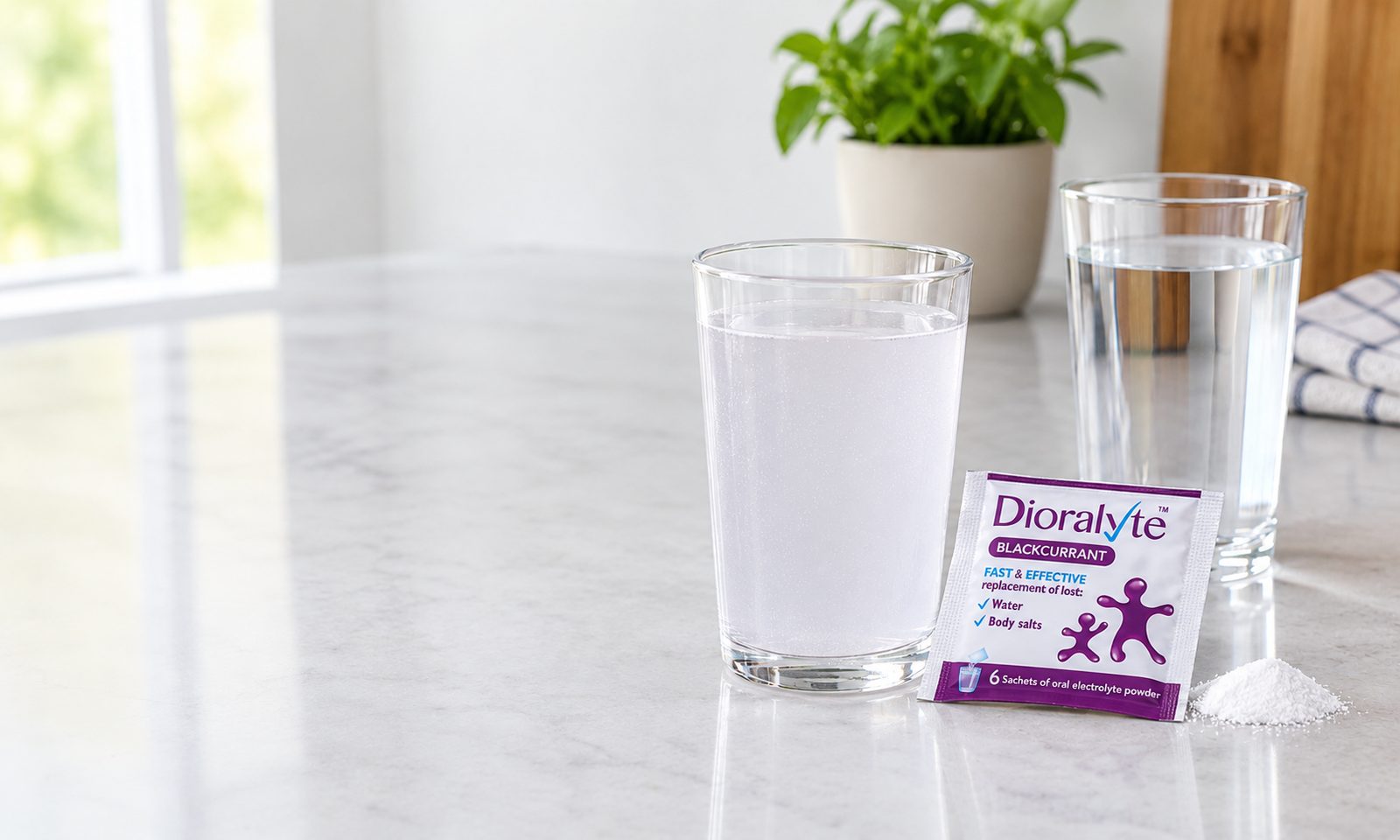
Dioralyte Blackcurrant is one of the better-known formulations in the range. Each sachet contains glucose and a combination of electrolyte ingredients, including sodium chloride, potassium chloride, and disodium hydrogen citrate. It also includes ingredients that provide the blackcurrant flavour and sweetness.
The sachet is mixed with water before use. Following the preparation instructions matters because the concentration of the final solution is part of how an oral rehydration product is intended to work. Adding too little or too much water can change the concentration of the ingredients in the finished drink.
Dioralyte Relief Blackcurrant Ingredients
Dioralyte Relief Blackcurrant is formulated differently from standard Dioralyte. Its formulation includes pre-cooked rice powder, along with sodium citrate, sodium chloride, and potassium chloride. The inclusion of rice powder distinguishes it from the standard Blackcurrant formulation.
This difference is particularly useful to understand if you are comparing Dioralyte products. Two products can look similar on a pharmacy shelf while having different ingredient lists and formulations. Always read the packaging for the particular product you are buying.
How Do Dioralyte Ingredients Work Together?
The real value of an oral rehydration solution comes from the combination of its ingredients rather than one ingredient working alone. Water provides the fluid, glucose helps support the absorption of sodium and water in the intestine, while sodium and potassium replace electrolytes that may have been lost.
The formulation is therefore quite different from simply drinking plain water. During significant diarrhoea or vomiting, the body may lose both fluid and electrolytes. An appropriately prepared oral rehydration solution is designed to address both aspects.
Why Plain Water May Not Be Enough
Plain water is obviously important for hydration, but dehydration caused by diarrhoea or vomiting can involve the loss of electrolytes as well as water. Depending on the circumstances, replacing only water may not provide the same balance of substances supplied by an oral rehydration solution.
That does not mean everyone who feels thirsty needs Dioralyte. The product is intended for specific situations involving fluid and electrolyte loss, and the accompanying instructions should be followed. For persistent or severe symptoms, medical advice may be necessary.
How Should Dioralyte Be Prepared?
Dioralyte should be prepared according to the instructions supplied with the specific product. The standard preparation involves dissolving the contents of a sachet in the stated amount of drinking water. The water quantity matters because the final concentration of glucose and electrolytes depends on how much water is used.
Do not guess the amount of water or make the solution stronger because you think it will work faster. A correctly prepared oral rehydration solution has a particular balance of ingredients, and changing the amount of water changes that balance.
Can You Mix Dioralyte With Juice or Soft Drinks?
It is generally best to prepare Dioralyte exactly as directed rather than mixing it with juice, fizzy drinks, milk, or other beverages. Adding other drinks can change the composition and concentration of the final solution.
If the taste is difficult to tolerate, choosing an appropriate flavour may be more sensible than altering the preparation method. For children, parents and carers should follow the age-specific instructions and seek professional advice when symptoms are concerning.
Who Should Be Careful With Dioralyte?
Most people can use oral rehydration products when they are appropriate for their situation, but certain medical conditions or circumstances may require additional care. People with significant kidney problems, certain heart conditions, or conditions affecting electrolyte balance may need professional advice before using products containing sodium and potassium.
It is also important to consider medicines and other treatments. If someone takes prescription medicines or has an existing medical condition, a pharmacist or doctor can help determine whether an oral rehydration product is suitable.
Can Children Take Dioralyte?
Dioralyte products may be used in children in appropriate circumstances, but the correct product, preparation method, and amount depend on the child’s age and situation. Young children can become dehydrated more quickly than adults, particularly when diarrhoea or vomiting is frequent.
Parents should carefully follow the instructions supplied with the product and pay attention to signs of dehydration. If a child appears seriously unwell, cannot keep fluids down, becomes unusually sleepy, or has other concerning symptoms, medical attention should be sought rather than relying solely on home rehydration.
What Should You Look for on the Ingredient Label?
When checking Dioralyte ingredients, start by identifying the exact product name and flavour. Then look at the active ingredients and the quantities per sachet. After that, check the other ingredients, particularly if you have an allergy, intolerance, dietary restriction, or sensitivity to a sweetener or flavouring.
This simple approach prevents one of the most common mistakes: using the ingredient list from one Dioralyte product to describe another. Product formulations can differ, so the current packaging and official patient information are the safest sources for product-specific details.
Does Dioralyte Contain Sugar?
Standard Dioralyte contains glucose, which is a type of sugar. However, glucose has an important functional role in oral rehydration rather than being included simply as a conventional sweetener.
Dioralyte also uses a sweetener in some flavoured formulations to improve taste. If you are monitoring sugar intake or have a condition requiring careful management of carbohydrates, check the product information and ask a healthcare professional if you are unsure whether a particular formulation is suitable.
Does Dioralyte Contain Sodium?
Yes. Sodium is supplied through ingredients such as sodium chloride and, depending on the formulation, sodium citrate or disodium hydrogen citrate. Sodium is an essential electrolyte and forms an important part of oral rehydration solutions.
The amount varies according to the specific Dioralyte product. That is another reason to check the label of the exact formulation rather than assuming all Dioralyte sachets contain identical quantities.
Does Dioralyte Contain Potassium?
Yes. Standard Dioralyte formulations contain potassium supplied through potassium chloride. Potassium is an essential electrolyte that contributes to normal muscle and nerve function.
Because potassium levels can matter for people with certain medical conditions, anyone with kidney disease or another condition affecting potassium balance should ask a healthcare professional before using an electrolyte product if they have been advised to restrict potassium.
Why Reading the Full Ingredient List Matters
Ingredient lists can look complicated at first glance, but each component has a reason for being there. Some ingredients actively contribute to rehydration, while others affect flavour, sweetness, stability, or manufacturing.
The most useful distinction is between the active ingredients and the other ingredients. For Dioralyte, glucose and electrolytes form the core of the rehydration formulation, while flavouring and sweetening ingredients mainly affect how the product tastes and behaves.
Dioralyte Ingredients: The Bottom Line
The key thing to remember about Dioralyte ingredients is that the product is built around a carefully balanced combination of glucose and electrolytes. Standard Dioralyte Blackcurrant contains glucose, sodium chloride, potassium chloride, and disodium hydrogen citrate, alongside other ingredients used for flavour and formulation.
Different Dioralyte products can have different compositions, so there is no single ingredient list that applies to every product carrying the Dioralyte name. If you are checking the product because of an allergy, dietary requirement, medical condition, or medication, use the current packaging and patient information for the exact product.
Conclusion
Looking at the ingredients makes the purpose of Dioralyte much clearer. It is not simply flavoured water and it is not designed around one magic ingredient. Instead, its formulation combines fluid, glucose, sodium, potassium, and other components in a way intended to support rehydration when the body has lost fluids and electrolytes.
Still, the details matter. Dioralyte ingredients vary between formulations, so always identify the exact product before comparing ingredient lists or deciding whether it is suitable for a particular dietary or medical situation. For persistent diarrhoea, repeated vomiting, severe dehydration, or symptoms that are getting worse, professional medical advice is more important than choosing between flavours.
Frequently Asked Questions
What are the main Dioralyte ingredients?
The main active ingredients in standard Dioralyte Blackcurrant are glucose, sodium chloride, potassium chloride, and disodium hydrogen citrate. These provide glucose and electrolytes used in the oral rehydration formulation.
Does Dioralyte contain glucose?
Yes. Standard Dioralyte contains glucose. It plays an important role in the absorption of sodium and water in the intestine and is therefore a functional part of the oral rehydration formulation.
Does Dioralyte contain potassium?
Yes. Standard Dioralyte contains potassium in the form of potassium chloride. Potassium is an essential electrolyte involved in normal nerve and muscle function.
Does Dioralyte contain sodium?
Yes. Sodium is provided by ingredients including sodium chloride and disodium hydrogen citrate in the standard Blackcurrant formulation. Sodium is an important electrolyte that can be lost during significant fluid loss.
Are Dioralyte Blackcurrant and Dioralyte Relief the same?
No. They have different formulations. Dioralyte Relief Blackcurrant contains pre-cooked rice powder and uses a different combination of active ingredients, so the two products should not be treated as identical.
Read also: Dioralyte Blackcurrant Sachets Reviews and User Guide

One thought on “Dioralyte Ingredients What’s Really Inside Each Sachet?”