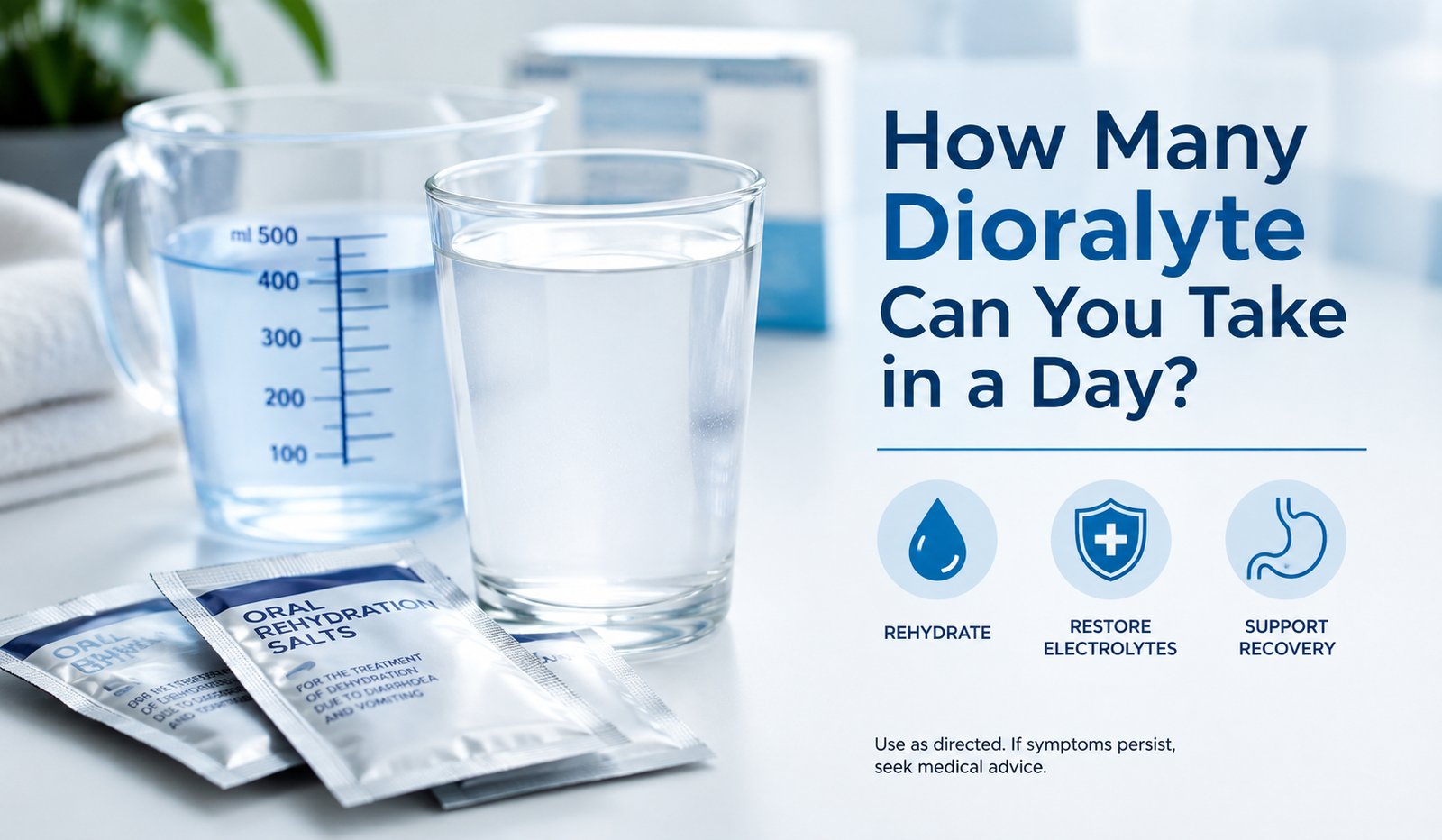
How Many Dioralyte Can You Take in a Day? Adults and children over 1 year can usually take one Dioralyte sachet after each loose stool, up to five sachets in 24 hours. You may need fewer depending on how much fluid you’re losing. Keep drinking other fluids too, as Dioralyte supports hydration rather than replacing your normal fluid intake.
What Is Dioralyte Used For?
Dioralyte is an oral rehydration treatment designed to help replace water and important salts lost through diarrhea and vomiting. When you lose fluids, you can also lose electrolytes such as sodium and potassium. An oral rehydration solution contains carefully balanced amounts of salts and glucose to help the body absorb fluids more effectively. That is why Dioralyte can be useful when simply drinking water does not adequately replace what has been lost.
How Does Dioralyte Work?
The key idea behind oral rehydration is relatively simple. The small intestine can absorb glucose and sodium together, and water follows this process. Dioralyte provides these components in a measured formulation, helping restore fluid and electrolyte balance. It does not directly stop diarrhea or treat the underlying infection, but it can help reduce the risk of dehydration while your body recovers.
How Many Sachets Should an Adult Take?
For an adult using Dioralyte Relief, the usual recommendation is one sachet after each loose stool, up to five sachets within 24 hours. If you have several episodes of diarrhea, take the recommended amount rather than taking several sachets at once simply because you want to rehydrate faster. Continue drinking suitable fluids as well. If diarrhea is severe, persistent, or accompanied by concerning symptoms, Dioralyte alone may not be enough and medical advice should be sought.
Can You Take Five Dioralyte Sachets in One Day?
Yes, five sachets in 24 hours is the stated maximum for adults and children over 1 year for Dioralyte Relief, but reaching that maximum is not a requirement. The sachets are intended to replace fluid and salts lost through loose stools. Taking more than the recommended maximum does not necessarily provide better protection against dehydration and may result in an inappropriate intake of electrolytes. Follow the product instructions rather than exceeding the stated daily limit.
How Much Dioralyte Can Children Take?
Children need particular care because their fluid requirements depend on age and body weight. For Dioralyte Relief, children over 1 year generally follow the same maximum of five sachets in 24 hours, with one sachet taken after each loose stool. However, younger children should not simply be given an adult-style dose without checking the product information or getting professional advice. Babies and very young children can become dehydrated quickly, so persistent diarrhea or vomiting deserves prompt medical attention.
What About Babies Under 1 Year?
Extra caution is needed with babies. The dosing instructions for Dioralyte products can differ according to age and formulation, and very young infants should not be dosed using a general adult recommendation. If a baby has diarrhea or repeated vomiting, speak with a doctor, pharmacist, or other healthcare professional for advice about oral rehydration and the appropriate amount. Signs of dehydration in an infant should be treated seriously rather than managed solely at home.
How Should You Prepare a Dioralyte Sachet?
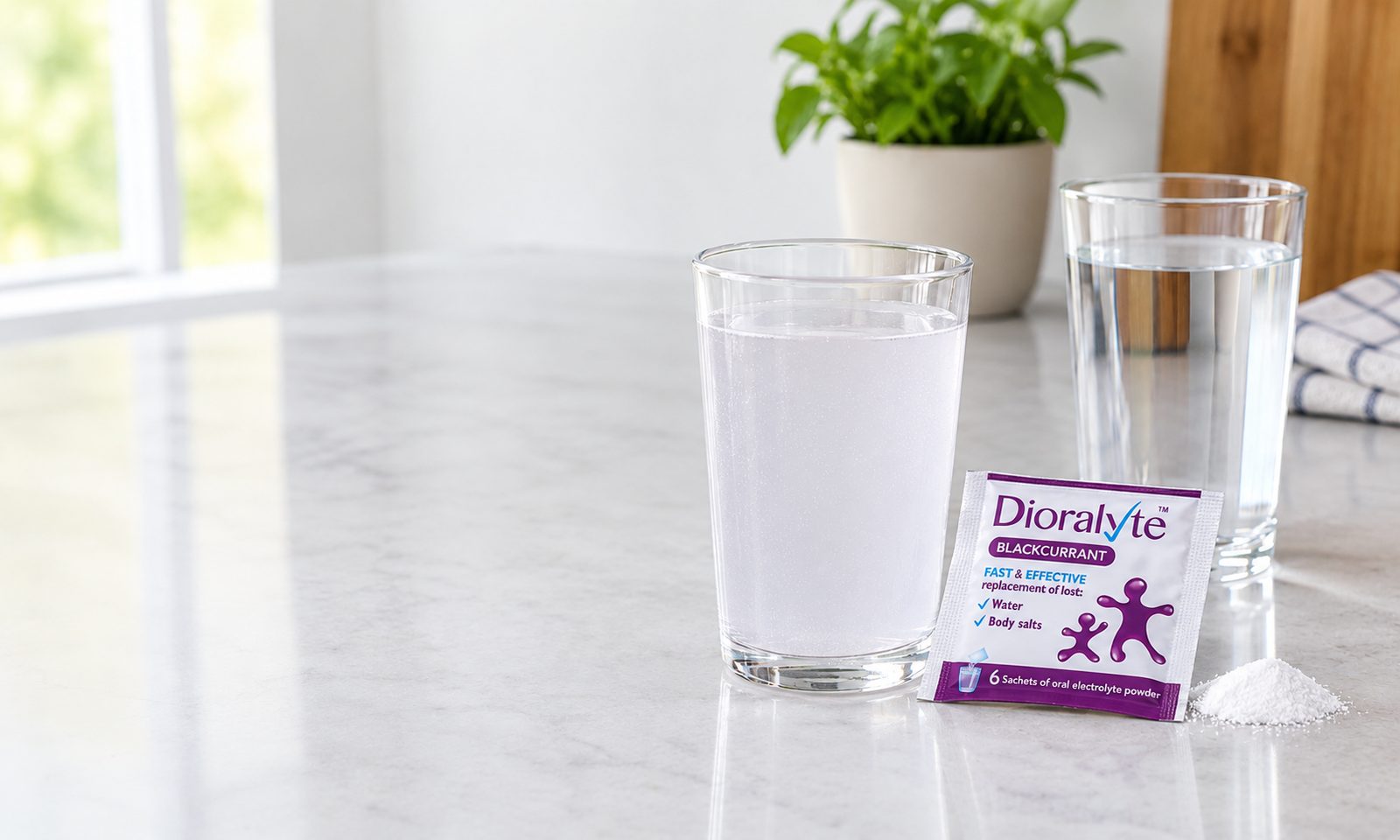
Correct preparation matters just as much as the number of sachets taken. A Dioralyte sachet should be dissolved using the precise amount of water specified on the product packaging. For Dioralyte Relief, one sachet is commonly dissolved in 200 ml of water. Do not deliberately use less water to make a stronger solution. Likewise, adding considerably more water changes the concentration of the ingredients and can make the solution unsuitable for its intended purpose.
Can You Drink Dioralyte After Every Episode of Diarrhea?
Dioralyte Relief is intended to be taken after loose stools, according to the product’s dosing instructions. The important point is to follow the recommended quantity rather than treating every stomach symptom as a reason to take another sachet. If diarrhea happens repeatedly, keep track of how many sachets have been taken during the 24-hour period so you do not accidentally exceed the recommended maximum.
Should You Drink Water With Dioralyte?
Yes. Dioralyte is not meant to be your only source of fluid. When you have diarrhea or vomiting, continue drinking appropriate fluids in addition to taking oral rehydration solution. Small, frequent drinks can be easier to tolerate if your stomach feels unsettled. If vomiting makes it difficult to keep fluids down, take small sips frequently and seek medical advice if you cannot maintain hydration.
What Happens If You Take Too Much Dioralyte?
Taking more than the recommended amount is not a good way to speed up recovery. Oral rehydration solutions contain specific quantities of electrolytes, so excessive use can potentially disturb the body’s electrolyte balance, particularly in people with certain medical conditions or reduced kidney function. If you accidentally take substantially more than recommended, contact a pharmacist, doctor, or appropriate medical service for advice rather than taking further sachets.
Can You Take Dioralyte and Other Medicines?
Dioralyte may be used alongside some medicines, but diarrhea and vomiting can affect how well medicines are absorbed. Certain medications may also require special consideration when you are dehydrated. If you regularly take prescription medicines, have kidney or heart problems, or have been told to restrict your fluid or salt intake, ask a healthcare professional before using oral rehydration products.
Is Dioralyte Suitable for Everyone?
Not necessarily. People with particular medical conditions may need professional advice before taking an oral rehydration solution. This is especially important for people with significant kidney problems, certain heart conditions, or conditions requiring control of sodium or potassium intake. The safest approach is to read the leaflet supplied with your specific Dioralyte product and ask a pharmacist or doctor if you are unsure.
How Long Should You Take Dioralyte?
Dioralyte is generally used while fluid and electrolyte losses are occurring, rather than as a routine daily drink. If diarrhea settles, there may no longer be a need to continue taking it. On the other hand, ongoing diarrhea means you should pay attention to hydration and the underlying cause. If symptoms continue for several days, become severe, or keep returning, professional medical advice is more appropriate than simply continuing oral rehydration indefinitely.
What Are the Signs of Dehydration?
Dehydration can develop when the body loses more fluid than it replaces. Common signs include unusual thirst, a dry mouth, dark or reduced urine, dizziness, tiredness, and weakness. More serious dehydration can cause confusion, extreme drowsiness, very little urine, rapid breathing, or other significant changes. Children may also become unusually sleepy, irritable, or have fewer wet nappies. Severe symptoms require urgent medical attention.
When Should You Seek Medical Advice?
Dioralyte can support rehydration, but it is not a substitute for medical care when symptoms are serious. Seek medical advice if diarrhea is severe or persistent, you cannot keep fluids down, you notice blood in your stool, you develop significant abdominal pain, or you have symptoms suggesting serious dehydration. Young children, older adults, and people with significant underlying health problems may need medical assessment sooner because dehydration can become serious more quickly.
Does Dioralyte Stop Diarrhea?
No. Dioralyte is primarily intended to help replace water and electrolytes lost through diarrhea or vomiting. It does not work like an anti-diarrheal medicine and does not necessarily make bowel movements stop. Its main purpose is supporting hydration while the underlying illness improves. This distinction is important because someone can still have diarrhea while becoming better hydrated.
Can You Take Dioralyte for Vomiting?
Oral rehydration solutions can be useful when vomiting causes fluid and electrolyte losses, but drinking a large amount quickly may trigger more vomiting. Small, frequent sips are often easier to tolerate. If you repeatedly vomit and cannot keep Dioralyte or other fluids down, dehydration can develop rapidly, and medical advice should be obtained.
Is Five Sachets Always the Right Amount?
No. Five sachets is a maximum rather than a target for adults and children over 1 year using Dioralyte Relief. Someone with one loose stool may not need five sachets, whereas someone experiencing repeated diarrhea may require more attention to hydration. The safest approach is to follow the dosing instructions for the exact product you have and monitor your symptoms rather than automatically taking the maximum.
Dioralyte and Hydration: The Bigger Picture
It is easy to focus on the number printed on the box, but hydration is about more than counting sachets. Your body loses water and electrolytes through diarrhea and vomiting, so replacing both matters. Dioralyte can provide a measured oral rehydration solution, while ordinary fluids help contribute to overall fluid intake. Paying attention to urine output, thirst, energy levels, and other symptoms can give you a better picture of whether you are recovering.
What If Diarrhea Keeps Coming Back?
If diarrhea continues despite drinking fluids and using oral rehydration solution as directed, the next step should not simply be taking more Dioralyte. Persistent diarrhea can have several causes, including infections, food-related illness, medication effects, and other gastrointestinal conditions. If symptoms are prolonged, severe, or accompanied by warning signs, a healthcare professional can determine whether further investigation or treatment is needed.
Conclusion
For Dioralyte Relief, adults and children over 1 year can generally take one sachet after each loose stool, up to a maximum of five sachets in 24 hours. The sachets should be prepared exactly according to the instructions on the packet, and you should continue drinking suitable fluids. Do not exceed the recommended amount simply because diarrhea continues. If you are asking about a baby or young child, have a medical condition, take regular medicines, or have significant vomiting or dehydration symptoms, get advice from a healthcare professional.
FAQs
1. How many Dioralyte can you take in 24 hours?
For Dioralyte Relief, adults and children over 1 year can generally take one sachet after each loose stool, up to a maximum of five sachets in 24 hours.
2. Can I take more than five Dioralyte sachets?
You should not exceed the recommended maximum without medical advice. Taking more does not necessarily rehydrate you faster and may provide an excessive amount of electrolytes.
3. Can children take Dioralyte?
Yes, Dioralyte Relief can be used by children over 1 year according to the product directions. Younger children require greater care, and their dosing should be checked with a healthcare professional.
4. Do I need to drink water with Dioralyte?
Yes. Dioralyte helps replace water and electrolytes, but it should not necessarily replace your normal fluid intake. Continue taking suitable fluids while recovering.
5. Can I take Dioralyte for vomiting?
Dioralyte may help replace fluids and salts lost through vomiting. Take small, frequent amounts if drinking makes you feel sick. If you cannot keep fluids down, seek medical advice
Read also: Dioralyte Ingredients What’s Really Inside Each Sachet?

One thought on “How Many Dioralyte Can You Take in a Day?”