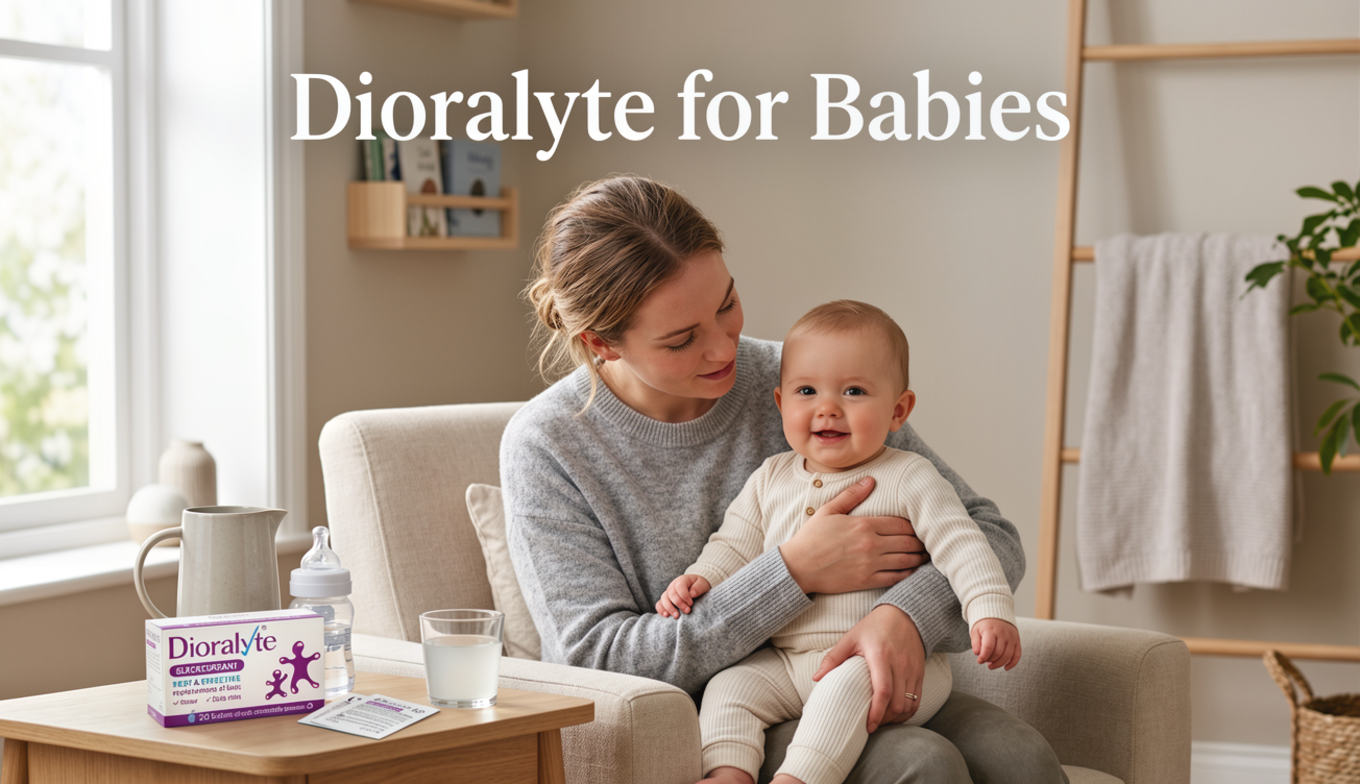
Dioralyte for babies may be suitable in some cases, but it depends on the baby’s age, the specific Dioralyte product, and advice from a healthcare professional. Dioralyte is an oral rehydration solution that contains electrolytes and other ingredients designed to help replace fluid and salts lost during diarrhoea. It is mixed with water before being given orally. The purpose is not simply to stop diarrhoea but to help prevent or correct dehydration caused by fluid loss.
This distinction is important for parents. Diarrhoea itself may settle with time, but dehydration can become a more serious problem, particularly in infants. Oral rehydration solutions work by providing a carefully balanced combination of water, salts and glucose or other components that help the body absorb fluid.
Can Babies Take Dioralyte?
Some babies can receive certain Dioralyte products, but the answer depends on their age, the specific formulation and the advice of a healthcare professional. For example, Dioralyte Relief information states that it should not be given to infants under 3 months, while babies aged 3 months to 1 year should receive it under medical advice.
The standard Dioralyte product information also states that babies under 2 years with diarrhoea should be seen by a physician as soon as possible. This makes age an important consideration before giving any sachet to a baby.
Why Is Rehydration Important for Babies?
A baby with repeated watery stools or vomiting can lose more fluid than usual. If those losses are not replaced, dehydration can develop. Babies are particularly vulnerable because they are small and depend on parents or carers to provide nearly all their fluids.
Signs can include fewer wet nappies, unusual sleepiness, poor feeding or difficulty keeping fluids down. NHS guidance advises seeking urgent medical help when a child under 5 has signs of dehydration such as fewer wet nappies, and parents should seek urgent advice if they are worried about a baby under 12 months.
Dioralyte for Babies With Diarrhoea
Dioralyte can be used as oral rehydration treatment for fluid and electrolyte loss associated with diarrhoea, but babies should not simply be given adult-style doses. The appropriate amount depends on factors including age, weight and the extent of fluid loss.
For babies, this is one reason professional guidance is useful. A healthcare professional can determine whether oral rehydration is appropriate and whether the baby needs additional assessment or treatment. Parents should also continue paying attention to feeding, wet nappies and the baby’s general behaviour.
Dioralyte for Babies With Vomiting
Vomiting can make rehydration more difficult because a baby may bring fluids straight back up. In this situation, small and frequent amounts may be easier to tolerate than a large quantity at once. The product information for Dioralyte Relief gives specific guidance for infants under medical supervision, including 5–10 ml every 5 minutes when vomiting accompanies diarrhoea.
Parents should not interpret this as a universal dose for every baby. The baby’s age, weight, hydration status and the exact Dioralyte formulation all matter. If the baby repeatedly vomits and cannot keep fluids down, urgent medical advice is recommended.
How Do You Prepare Dioralyte for a Baby?
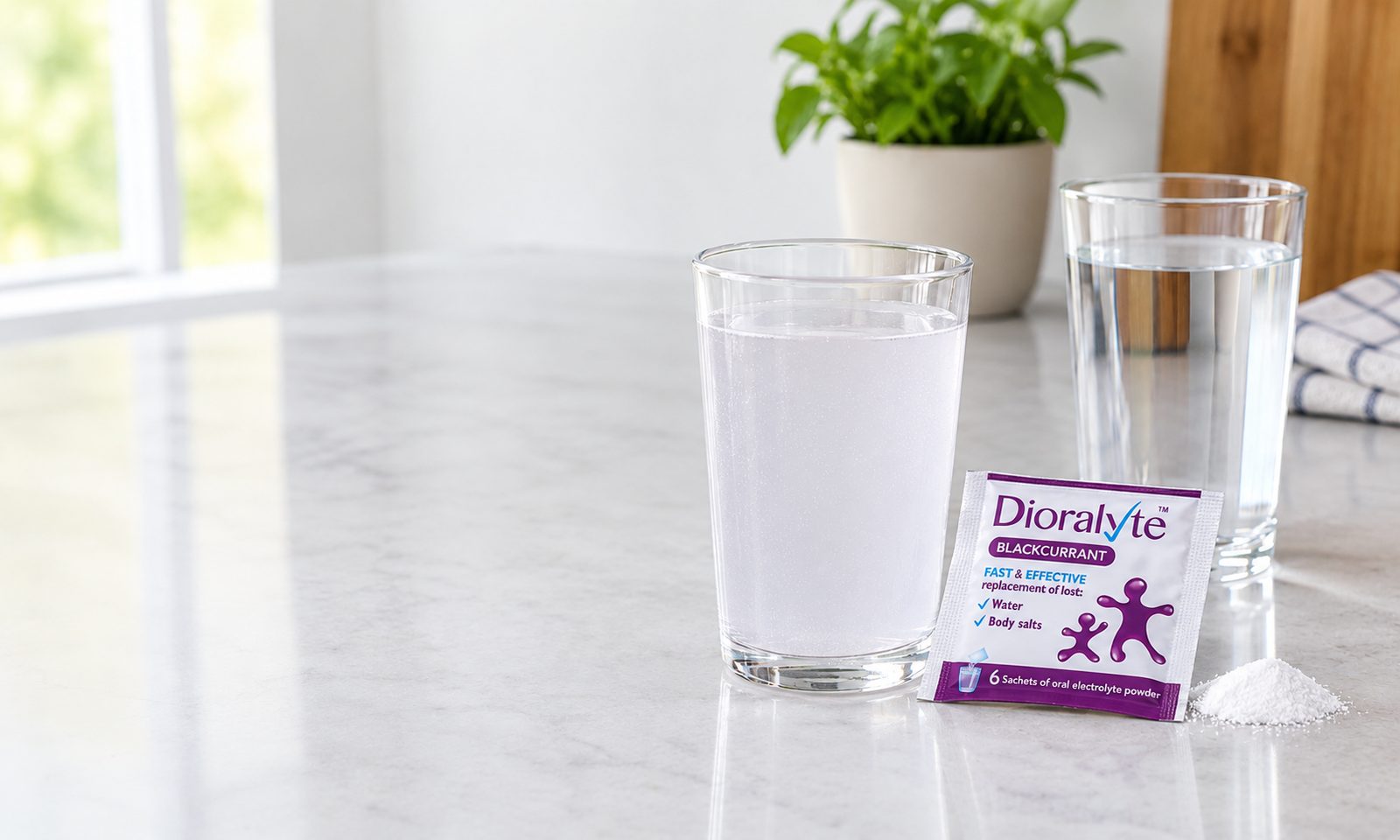
Preparation needs to be exact because changing the amount of water changes the concentration of salts and other ingredients. The standard product information says one sachet should be dissolved in 200 ml of water. For infants, freshly boiled and cooled water should be used when drinking water is unavailable, according to the product information.
Do not guess the amount of water or make the mixture stronger because the baby has severe diarrhoea. A stronger or weaker preparation can upset the intended balance of electrolytes. The official instructions specifically warn that each sachet should be dissolved in the stated amount of water.
How Much Dioralyte Can a Baby Have?
There is no single safe amount that applies to every baby. For some Dioralyte Relief products, the official information gives a weight-based amount of 150–200 ml/kg over 24 hours for infants aged 3 months to 1 year under medical advice. It also describes dividing the amount between the first 8 hours and the following 16 hours.
That information should not be used to calculate a baby’s treatment without professional guidance. A baby who is mildly affected is different from one who is significantly dehydrated, vomiting repeatedly or has another medical problem. If you are unsure about the amount, contact a doctor or pharmacist rather than estimating the dose.
Can You Give Dioralyte Instead of Breastfeeding?
Dioralyte is not a replacement for normal infant feeding in every situation. NHS guidance recommends continuing to breastfeed a baby during diarrhoea and vomiting, with smaller and more frequent feeds if the baby is being sick.
For formula-fed babies, parents should generally continue using formula at its usual strength rather than deliberately making it weaker. NHS guidance specifically advises against diluting formula during diarrhoea or vomiting.
What Should Parents Watch for During Diarrhoea?
Wet nappies are one of the simplest things parents can monitor at home. A noticeable reduction in wet nappies can be a warning sign that the baby is not getting enough fluid. Feeding behaviour is also important because a baby who suddenly refuses breast or bottle feeds may need medical assessment.
Parents should also watch for unusual drowsiness, repeated vomiting, worsening diarrhoea and changes in the baby’s normal behaviour. Babies can deteriorate faster than older children, so it is better to seek advice early when something does not seem right.
When Should You Seek Medical Help?
A baby with diarrhoea should not simply be treated at home indefinitely. The NHS recommends urgent advice if you are worried about a baby under 12 months, if the baby stops breastfeeding or bottle feeding, if there are signs of dehydration such as fewer wet nappies, or if the child keeps being sick and cannot keep fluids down.
Medical attention is particularly important when there is blood in the stool, persistent vomiting, significant dehydration or other symptoms that suggest the baby may be seriously unwell. Severe symptoms should be treated as an emergency rather than managed with an oral rehydration sachet at home.
Is Dioralyte Safe for Newborn Babies?
Dioralyte should not be assumed to be suitable for newborns. Some formulations specifically state that they should not be administered to infants under 3 months, while other product information requires medical supervision for infants under 2 years.
For a newborn or very young infant with diarrhoea or vomiting, contacting a healthcare professional is the safer approach. At this age, even seemingly mild symptoms can deserve closer assessment because babies have limited reserves and cannot communicate how they feel.
Can Dioralyte Be Given With Breast Milk?
Breastfeeding can generally continue when a baby has diarrhoea or vomiting. NHS guidance recommends continuing breastfeeding and trying smaller, more frequent feeds if vomiting is occurring.
Dioralyte, when specifically recommended, is used to replace lost fluids and electrolytes rather than to replace breast milk nutritionally. A healthcare professional can advise how an oral rehydration solution should fit alongside the baby’s normal feeding routine.
Can You Mix Dioralyte With Milk?
Dioralyte should not be mixed with milk, juice or another liquid simply to make it easier for a baby to take. The official product information states that the sachet should be reconstituted with water and not with other diluents.
Using the correct amount of water matters because the formulation is designed around a specific concentration. If a baby refuses the solution, ask a healthcare professional or pharmacist about the best way to administer it rather than changing the preparation yourself.
How Long Can Prepared Dioralyte Be Kept?
Prepared Dioralyte should be handled carefully. The standard product information says the solution should be prepared immediately before use and can be stored for up to 24 hours in a refrigerator; otherwise, remaining solution should be discarded after an hour.
Always check the instructions supplied with the exact product you have because formulations can differ. Fresh preparation and appropriate storage help reduce the risk of contamination and ensure the solution is used as intended.
What Should You Avoid Giving a Baby With Diarrhoea?
Fruit juice and fizzy drinks are not good substitutes for an oral rehydration solution and can make diarrhoea worse. NHS guidance also recommends not weakening infant formula.
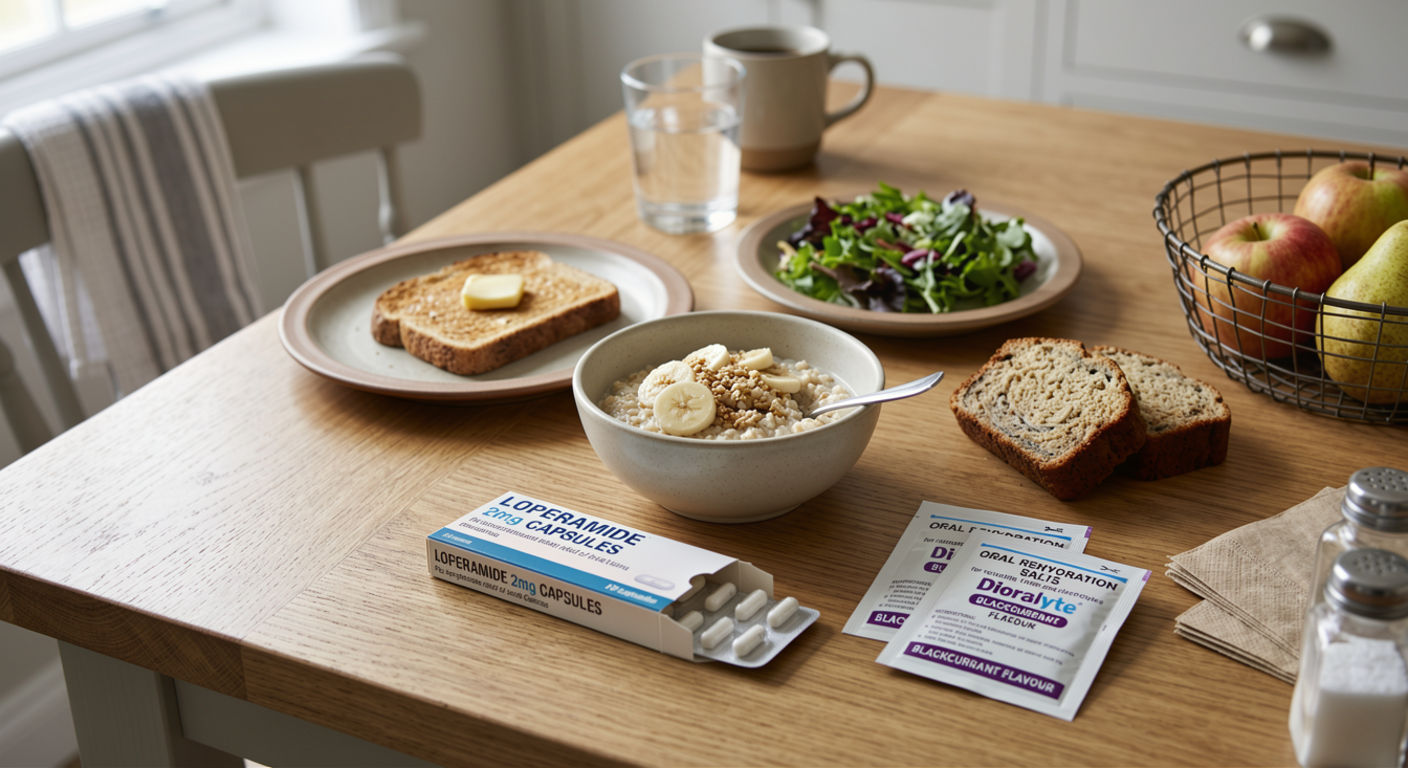
It is also important not to give medicines intended to stop diarrhoea unless a healthcare professional specifically recommends them. For babies, treating the underlying fluid loss and monitoring for dehydration are much more important than trying to stop every loose stool.
Conclusion
The main point is simple: Dioralyte can help replace fluids and electrolytes lost through diarrhoea, but babies need extra care and should not be given it without considering their age and the specific product instructions. Some formulations are unsuitable for babies under 3 months, while official guidance recommends medical supervision for younger children.
If your baby has diarrhoea or vomiting, continue appropriate breastfeeding or normal formula feeding and watch closely for dehydration. If the baby has fewer wet nappies, stops feeding, repeatedly vomits, becomes unusually sleepy or you are simply worried about their condition, seek medical advice promptly.
FAQs
1. Can I give Dioralyte to my baby?
Some Dioralyte formulations can be used in infants, but age restrictions apply and medical advice may be required. For example, Dioralyte Relief should not be given to babies under 3 months and is intended for babies aged 3 months to 1 year under medical advice.
2. How much Dioralyte should I give my baby?
The amount depends on the baby’s weight, age, degree of dehydration and the specific product. Do not calculate a dose independently for a sick infant; ask a doctor or pharmacist for individual guidance.
3. Can I give Dioralyte to a baby with vomiting?
An oral rehydration solution may be used when medically appropriate, but vomiting can make rehydration difficult. Small, frequent amounts may be recommended, and a baby who cannot keep fluids down needs urgent medical advice.
4. Should I continue breastfeeding while my baby has diarrhoea?
Yes. NHS guidance recommends continuing breastfeeding during diarrhoea and vomiting, with smaller and more frequent feeds if the baby is being sick.
5. How do I mix Dioralyte for a baby?
Follow the exact instructions for the product. Standard Dioralyte instructions state that one sachet is dissolved in 200 ml of water. Do not use less or more water because this changes the concentration of the solution.

One thought on “Is dioralyte for babies? Safety and Guidance”