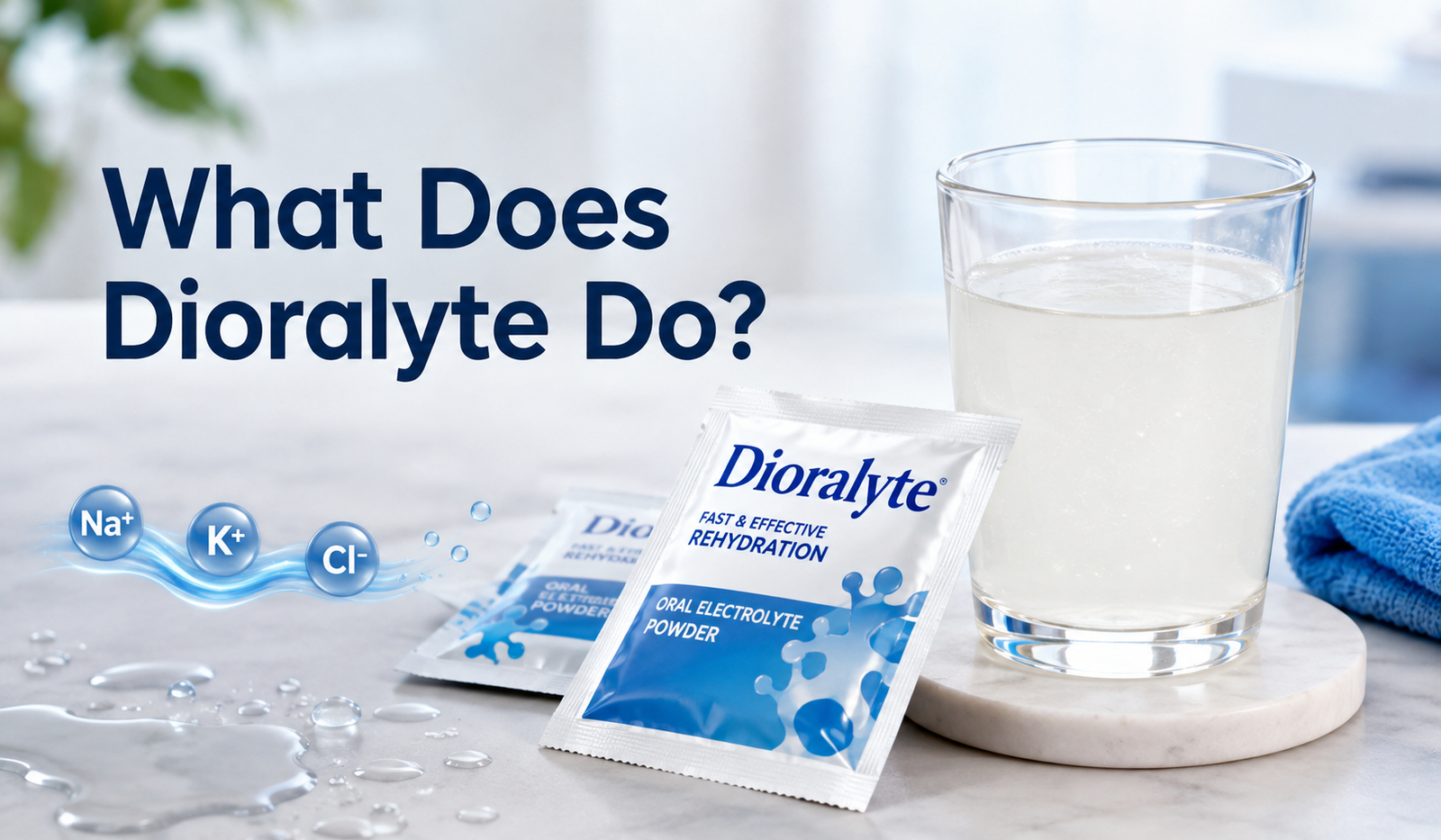
What does Dioralyte do? Dioralyte helps replace the water and essential salts your body loses through diarrhea or vomiting. Its mix of electrolytes and glucose helps your body absorb fluids more effectively. It is mainly used to prevent or treat dehydration, not to stop diarrhea itself.
What Does Dioralyte Do?
Dioralyte helps replace fluids and electrolytes lost through diarrhea, vomiting, or other causes of dehydration. It contains glucose and electrolytes, including sodium and potassium, which work together to help the intestine absorb water and restore the body’s fluid balance.
The main goal is simple: rehydration. If someone has frequent loose stools or repeated vomiting, the body can lose more water and salts than usual. Dioralyte helps replenish those losses and can reduce the risk of dehydration becoming more serious.
How Does Dioralyte Work?
Dioralyte works through a process called oral rehydration. The glucose and sodium in the solution help the small intestine absorb water from the digestive tract. Once absorbed, that water helps restore the fluid circulating throughout the body.
This is why an oral rehydration solution is different from simply drinking a glass of water. Water provides fluid, but an ORS also provides important electrolytes that may have been lost.
The solution does not need to “cure” the underlying reason for diarrhea or vomiting to be useful. Its job is to help the body keep up with the fluid and electrolyte losses while the underlying problem improves.
Why Is Rehydration Important During Diarrhea?
Diarrhea can cause the body to lose surprisingly large amounts of water and electrolytes. Someone who has several episodes over a short period may begin feeling thirsty, tired, weak, dizzy, or generally unwell.
Replacing those losses early is important because dehydration can become more serious if fluid loss continues. This is particularly important for young children, older adults, and people who are already vulnerable to dehydration.
Dioralyte can provide both fluid and electrolytes in a form designed specifically for oral rehydration.
Does Dioralyte Stop Diarrhea?
No. Dioralyte does not directly stop diarrhea. Its purpose is to replace the water and salts lost because of diarrhea.
This distinction is important. You may still have loose stools after taking Dioralyte, but the solution is helping your body maintain hydration while the diarrhea runs its course or while the underlying cause is being treated.
Think of it as replacing what your body is losing rather than switching off the symptom itself.
Does Dioralyte Help With Vomiting?
Dioralyte can help replace fluids and electrolytes lost through vomiting, but it does not treat the underlying cause of vomiting.
If vomiting makes it difficult to keep fluids down, taking small amounts frequently may be easier than drinking a large quantity at once. However, persistent vomiting can lead to significant dehydration, and medical advice may be needed if fluids cannot be kept down.
What Is Dioralyte Used For?
Dioralyte is primarily used for the prevention and treatment of dehydration associated with diarrhea and vomiting. Oral rehydration solutions can also be useful when the body has lost substantial fluids and electrolytes for other reasons, depending on the product instructions and medical advice.
The important point is that Dioralyte is intended to restore hydration and electrolyte balance. It is not an antibiotic, painkiller, or medicine designed to eliminate every possible cause of diarrhea.
What Is Inside Dioralyte?
Dioralyte formulations contain a mixture of electrolytes and glucose intended to support oral rehydration. Depending on the particular Dioralyte product, the exact ingredients and quantities can differ, so it is sensible to check the packaging or patient information leaflet for the product you have.
The ingredients have a specific purpose rather than simply being added for taste. Sodium and other electrolytes help replace salts lost from the body, while glucose assists the absorption of sodium and water in the intestine.
Dioralyte and Electrolytes: Why They Matter
Electrolytes are minerals that help the body carry out important functions, including maintaining fluid balance and supporting normal nerve and muscle activity. Sodium and potassium are among the electrolytes that can be lost during significant fluid loss.
When diarrhea or vomiting continues, replacing only water may not adequately address these losses. An oral rehydration solution provides both fluid and electrolytes in a carefully formulated mixture.
That balance is one reason ORS products are commonly used when dehydration is linked to gastrointestinal illness.
How Do You Take Dioralyte?
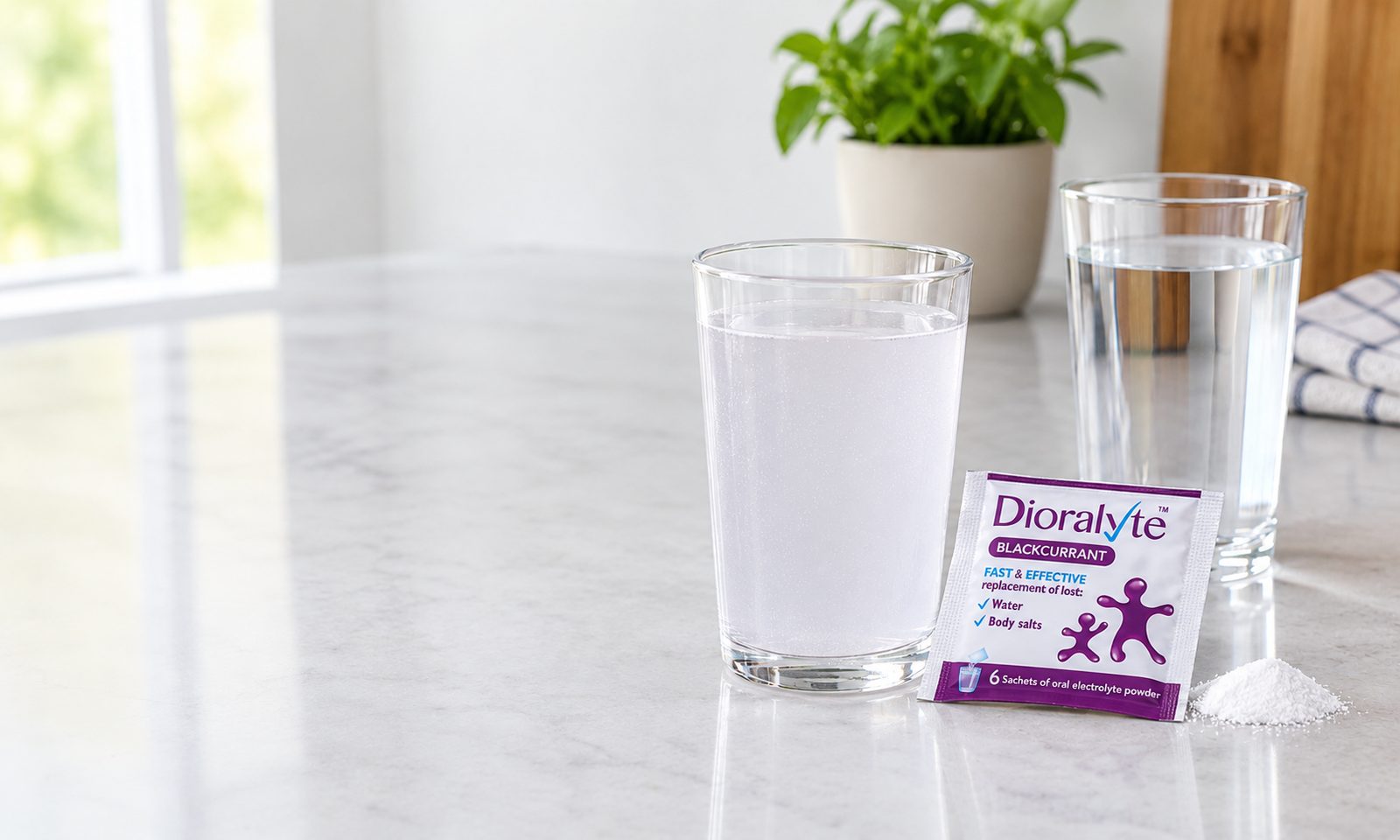
Dioralyte should be prepared and taken according to the instructions supplied with the specific product. The sachet is generally dissolved in the stated amount of clean water before drinking.
Getting the amount of water right matters. Do not make the solution more concentrated or more diluted than the instructions recommend, because the balance of water, salts, and glucose is important for proper oral rehydration.
If you are preparing Dioralyte for a child, always check the age-specific instructions and ask a pharmacist or healthcare professional if you are unsure.
Can You Drink Dioralyte Instead of Water?
Dioralyte is not normally intended to replace your everyday drinking water when you are healthy and adequately hydrated. It is formulated for situations where additional fluid and electrolyte replacement is needed.
During diarrhea or vomiting, however, an oral rehydration solution can be particularly useful because it replaces both water and electrolytes. You can still follow appropriate advice about drinking other fluids, depending on your circumstances.
How Quickly Does Dioralyte Work?
The body can begin absorbing the fluid and electrolytes from an oral rehydration solution relatively quickly. However, how quickly a person feels better depends on how dehydrated they are and whether fluid losses are continuing.
Someone with mild dehydration may start feeling better as hydration improves, while someone with severe dehydration may need urgent medical treatment rather than relying on an oral rehydration product at home.
If symptoms are getting worse rather than better, it is important not to assume that simply taking more Dioralyte will solve the problem.
What Are Signs of Dehydration?
Common signs of dehydration can include increased thirst, a dry mouth, dark-colored urine, urinating less often, tiredness, weakness, dizziness, and headache.
More serious dehydration can cause marked weakness, confusion, fainting, very little or no urine, or other concerning symptoms. Severe dehydration can be an emergency.
If someone appears seriously dehydrated, particularly a baby, young child, older person, or someone with a serious underlying illness, seek medical attention promptly.
Is Dioralyte Suitable for Children?
Oral rehydration solutions such as Dioralyte are commonly used for children with fluid loss, but the appropriate preparation and amount depend on the child’s age and circumstances.
Parents and carers should follow the product instructions carefully rather than estimating the amount themselves. If a child is repeatedly vomiting, becoming unusually sleepy, producing very little urine, or showing other signs of significant dehydration, medical advice should be obtained.
Babies and young children can become dehydrated more quickly than adults, so persistent diarrhea or vomiting deserves particular attention.
Can You Take Dioralyte for a Stomach Bug?
Dioralyte may be useful when a stomach bug causes diarrhea or vomiting because these symptoms can lead to dehydration.
However, it does not kill viruses or bacteria and does not necessarily shorten the illness. Its role is supportive: it helps replace the fluids and electrolytes that the illness causes you to lose.
For many uncomplicated stomach illnesses, maintaining hydration is one of the most important things you can do while the body recovers.
Are There Side Effects of Dioralyte?
Dioralyte is generally used to help correct dehydration, but medicines and rehydration products can have precautions and potential unwanted effects. Taking the product incorrectly, particularly by using the wrong amount of water, can affect the electrolyte concentration of the solution.
People with certain medical conditions, including some kidney or heart problems, may need specific advice before using electrolyte-containing products. Always check the product information and speak with a pharmacist or healthcare professional if you are uncertain.
If you experience an unusual or severe reaction after taking it, seek appropriate medical advice.
When Should You Not Rely on Dioralyte Alone?
Dioralyte can be helpful for fluid replacement, but it is not a substitute for medical care when dehydration is severe or the underlying illness may be serious.
Seek medical advice if diarrhea or vomiting is severe or persistent, if you cannot keep fluids down, if there is blood in the stool or vomit, if you develop severe abdominal pain, or if you have signs of significant dehydration.
You should also seek advice for vulnerable people, such as very young children, older adults, or people with significant underlying health problems, when fluid loss is substantial.
Dioralyte vs Plain Water
Plain water is important for normal hydration, but it does not contain the electrolytes and glucose found in an oral rehydration solution.
When substantial fluid has been lost through diarrhea or vomiting, an ORS can therefore be more appropriate than relying on water alone. The formulation is designed to help replace both water and salts.
That does not mean ordinary water is bad. It simply serves a different purpose. Dioralyte is specifically formulated for rehydration when fluid and electrolyte losses occur.
Dioralyte vs Sports Drinks
Sports drinks and oral rehydration solutions are not necessarily the same thing. Sports drinks are generally designed around exercise and fluid replacement, while ORS products are formulated specifically to replace water and electrolytes lost during dehydration associated with illnesses such as diarrhea.
The balance of glucose and electrolytes matters. For illness-related dehydration, a properly formulated oral rehydration solution is generally the more appropriate type of product.
What Does Dioralyte Do for Adults?
For adults, Dioralyte helps replace water and electrolytes lost through diarrhea or vomiting. It can be particularly useful when someone is losing fluids faster than usual and needs more than ordinary drinks to maintain hydration.
Adults should still follow the instructions on their specific product and pay attention to warning signs. If symptoms are severe, persistent, or accompanied by signs of serious dehydration, professional medical advice is important.
What Does Dioralyte Do for Babies and Children?
For babies and children, the main purpose is also to replace lost water and electrolytes. Because children have smaller bodies and can become dehydrated relatively quickly, maintaining hydration is especially important during bouts of diarrhea or vomiting.
The exact preparation and amount should be based on the product instructions and appropriate professional advice. Never assume that an adult preparation or dosage is suitable for a child.
Common Mistakes to Avoid
One of the biggest mistakes is preparing the solution with the wrong amount of water. Another is treating Dioralyte as though it were a medicine that directly cures diarrhea. It is also important not to ignore worsening symptoms simply because an ORS is being taken.
If diarrhea or vomiting continues, keep monitoring hydration and follow the product instructions. When symptoms are severe or unusual, contact a healthcare professional rather than relying entirely on self-treatment.
Conclusion
So, what does Dioralyte do? In simple terms, it helps your body replace water and essential electrolytes lost through diarrhea, vomiting, and dehydration. Its glucose-and-electrolyte formula supports the absorption of fluid through the intestine, helping restore hydration more effectively than plain water alone in situations where significant fluid and salt losses have occurred.
The key thing to remember is that Dioralyte treats dehydration, not the underlying cause of diarrhea or vomiting. Used correctly, it can be an important part of staying hydrated while the body recovers. If dehydration appears severe, symptoms persist, or you are concerned about a child or vulnerable adult, seek medical advice rather than relying on Dioralyte alone.
FAQs About What Dioralyte Does
1. What does Dioralyte do in the body?
Dioralyte helps replace water and electrolytes lost through diarrhea or vomiting. Its glucose and electrolyte combination helps the intestine absorb fluid.
2. Does Dioralyte stop diarrhea?
No. Dioralyte does not directly stop diarrhea. It helps prevent or treat dehydration caused by fluid and electrolyte losses.
3. Can Dioralyte help with vomiting?
Yes. It can replace water and electrolytes lost through vomiting, although it does not treat the underlying cause of vomiting.
4. Is Dioralyte the same as water?
No. Dioralyte contains water when prepared, but it also provides electrolytes and glucose designed to support oral rehydration.
5. Can children take Dioralyte?
Some Dioralyte products can be used by children, but the correct preparation and amount depend on the specific product and the child’s age. Follow the package instructions or ask a pharmacist.
Read also: Dioralyte Side Effects and Safety Guide


One thought on “What Does Dioralyte Do? Uses, Benefits, and More”