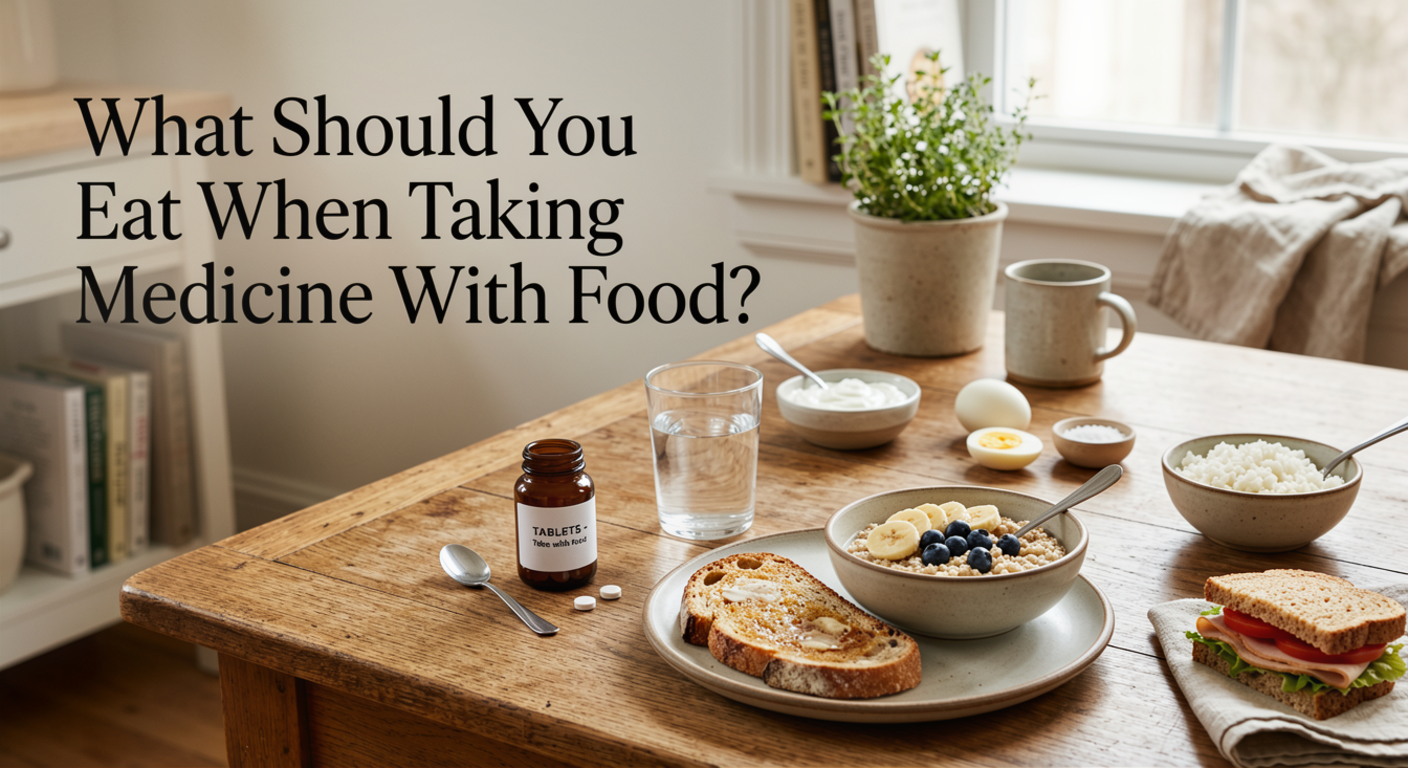
What should you eat when taking medicine with food? Learn which foods may help, what to avoid, and how to follow medication instructions safely. In general, choose a normal, balanced meal or a modest snack unless your medicine has specific dietary instructions. Good choices can include toast with eggs, oatmeal, yogurt with fruit, a small sandwich, rice with vegetables, or potatoes with a source of protein. The goal is not necessarily to eat a large amount, but to follow the medication’s instructions consistently.
If your medicine tends to upset your stomach, a bland option may be easier to tolerate. Crackers, toast, oatmeal, rice, bananas, or a small bowl of cereal can be practical choices. The FDA notes that taking some medicines with food may help reduce stomach upset or other side effects.
Why Do Some Medicines Need to Be Taken With Food?
There are several reasons a healthcare professional may tell you to take a medicine with food. For some drugs, food helps reduce irritation in the stomach and can make nausea or discomfort less likely. For other medicines, eating can change absorption in a way that helps the drug work as intended.
This is why “with food” should not automatically be interpreted as “eat anything you want.” Certain medicines have specific food requirements, and others can interact with particular foods or drinks. The FDA recommends checking whether a medicine has interactions with foods, beverages, supplements, or other medicines.
Best Foods to Eat With Medicine
Toast or Bread
Toast is one of the easiest choices when you need something simple with medication. You can have it plain or combine it with an egg, a little peanut butter, or another suitable topping if your medicine does not have special dietary restrictions.
Oatmeal or Porridge
Oatmeal can make a convenient breakfast when medication needs to be taken with food. It is filling without necessarily being heavy, and you can add fruit if those foods are compatible with your medicine.
Eggs
Eggs with toast can provide a small but substantial meal. This can be particularly practical in the morning when you need to take medication around breakfast time.
Yogurt and Fruit
Yogurt with fruit can be an easy snack, but dairy is not appropriate with every medicine. Some medications can interact with calcium or dairy products, so check the medication instructions before making yogurt your regular choice.
Rice and Other Simple Meals
A small serving of rice with vegetables, chicken, or another suitable protein can work well when your medicine needs to be taken during a regular meal. The important point is to follow any specific dietary instructions that come with the medicine.
Does “With Food” Mean You Need a Full Meal?
Not always. For some medicines, a small snack may be sufficient, while others are specifically intended to be taken with a meal. The exact requirement depends on the drug.
For example, some medications have instructions connected to the amount or type of food consumed. Orlistat is one example where the medication is taken before, with, or shortly after a meal, and the meal’s fat content affects whether a dose should be taken.
So if you are asking what should you eat when taking medicine with food, the safest general answer is: follow the medicine’s specific instructions first. If it simply says “take with food” without further details, a normal meal or suitable snack is often reasonable, but a pharmacist can clarify what is appropriate for that particular medication.
What Foods Should You Avoid With Medicine?
Some medicines have important food and drink interactions. Grapefruit and grapefruit juice, for example, can interact with certain medications and alter how the drug works. Other medicines may interact with dairy products, alcohol, foods high in vitamin K, or particular supplements.
Alcohol deserves particular attention because it can interact with medicines and increase unwanted effects. The FDA specifically warns that some over-the-counter medicines, including certain antihistamines and products containing dextromethorphan, can interact with alcohol.
That does not mean you need to avoid these foods or drinks with every medicine. It means you should check the label because interactions depend on the specific drug.
Can You Take Medicine With Milk?
It depends on the medicine. Milk is perfectly suitable with some medications but can interfere with the absorption of others because of its calcium content or other properties.
This is a good example of why choosing a food simply because it is nutritious is not enough. A food can be healthy but still unsuitable for a particular medication. If the medicine’s instructions mention avoiding dairy or calcium, use water and choose a different food with the medication.
Is Water Better Than Juice for Taking Medicine?
For many tablets and capsules, plain water is the safest default unless the medication instructions say otherwise. Certain juices can interact with medicines, and grapefruit juice is a well-known example.
You can eat your meal or snack alongside the medication while using water to swallow the tablet or capsule. If your prescription specifically says to take the medicine with another beverage, follow those instructions instead.
What If Medicine Makes Your Stomach Hurt?
If a medicine causes stomach discomfort, taking it with food may help when the medication is designed to be taken that way. The FDA notes that eating before taking certain medicines can reduce stomach upset.
A light meal can be easier to tolerate than very spicy, greasy, or unusually heavy food. Toast, oatmeal, rice, bananas, or a small sandwich may be gentler choices for some people. However, persistent stomach pain should not simply be treated by changing what you eat. Speak with a doctor or pharmacist if the medicine repeatedly causes significant discomfort.
Examples of Medicines That May Be Taken With Food
Different medicines have different instructions, so examples should not be treated as universal rules. Ibuprofen tablets and capsules, for instance, are generally advised to be taken with or after food to reduce stomach problems.
Paracetamol, by contrast, can generally be taken with or without food for adults, according to NHS guidance.
These examples show why it is important not to assume that every medicine requires food. The directions for the specific medication should always take priority.
What Should You Eat If You Have No Appetite?
If you have little appetite but your medicine needs food, you may be able to choose something small and easy to eat, depending on the medication’s instructions. A few crackers, toast, oatmeal, yogurt, a banana, or a small sandwich may be easier than a full meal.
However, don’t assume that a tiny snack is enough for every medicine. Some drugs have food-related instructions that are more specific. If you are unsure whether your snack counts as “with food,” ask a pharmacist.
Should You Take Medicine Before, During, or After a Meal?
The timing matters. “With food,” “with or after food,” “before a meal,” and “on an empty stomach” are not interchangeable instructions. They can affect how much of a medicine enters your bloodstream and how the medicine behaves in your body.
For example, NHS guidance says common ibuprofen tablets and capsules should ideally be taken with or after food, while other medicines have completely different timing requirements.
If the label says “before food,” don’t change the timing simply because you think eating will be gentler on your stomach. The medication may have been designed to be absorbed under different conditions.
How to Make Taking Medicine With Food Easier
One simple approach is to connect your medication with a regular meal, such as breakfast or dinner, when the instructions allow it. Eating around the same time each day can make it easier to remember doses and maintain a consistent routine.
For medicines where food affects absorption, consistency can matter. The Specialist Pharmacy Service notes that some medicines should be taken consistently in relation to food and mealtimes, particularly medicines where relatively small changes in absorption can matter.
Keeping your medication and meal routine predictable can therefore be more useful than constantly changing what you eat.
Common Mistakes to Avoid
One common mistake is assuming that more food is always better. If a medicine simply needs to be taken with food, eating a very large meal does not necessarily make the medicine work better. Another mistake is using milk, juice, coffee, or another beverage instead of water without checking whether it interacts with the medication.
It is also important not to crush tablets, open capsules, or mix medicine into food unless the instructions or a healthcare professional confirm that it is safe. Some medicines have special formulations that should remain intact.
How to Check What Food Is Safe With Your Medicine
Start with the medicine’s package, prescription label, or patient information leaflet. Look for instructions such as “take with food,” “take after meals,” “take on an empty stomach,” or warnings about specific foods and beverages.
If the instructions are unclear, ask a pharmacist. The FDA specifically recommends asking whether a medicine should be taken with food, before or after meals, and whether particular foods, drinks, supplements, or other medicines should be avoided.
This is especially important if you take several prescription medicines, over-the-counter products, vitamins, or herbal supplements because interactions can occur between medicines as well as between medicines and foods.
When Should You Contact a Doctor or Pharmacist?
Talk with a healthcare professional if you are unsure what “with food” means for your medicine, if you experience repeated vomiting or severe stomach discomfort after taking it, or if you suspect a food or drink is interfering with your medication.
You should also ask before making significant changes to your diet if you take a medicine that has known food interactions. Your pharmacist can check the exact medication, dose, formulation, and other medicines you use rather than giving you a general answer.
Conclusion
Knowing what should you eat when taking medicine with food can make medication routines much easier, but there is no single food that works for every medicine. Toast, oatmeal, eggs, rice, yogurt, fruit, and small sandwiches can be reasonable choices for many people when the medication simply needs to be taken with food.
The bigger point is to follow the instructions for the specific medicine. Food can sometimes protect the stomach, improve absorption, or change how a drug works. In other situations, certain foods can reduce absorption or cause an interaction.
When in doubt, check the label and ask a pharmacist. A two-minute conversation can prevent an unnecessary interaction and help ensure that you are taking the medicine in the way it was intended.
FAQs
What should you eat when taking medicine with food?
A simple meal or snack such as toast, oatmeal, eggs, rice, a sandwich, or fruit may be suitable for many medicines that simply need to be taken with food. However, the exact food requirement depends on the medicine, so check its label or ask a pharmacist.
Can I take medicine with a small snack instead of a meal?
Sometimes, but not always. Some medicines only need food in the stomach, while others require a particular type or amount of food. Do not assume a small snack is sufficient if the medication gives specific meal instructions.
Can I take medicine with milk?
Some medicines can be taken with milk, while others can interact with calcium or dairy products. Check the medication instructions before using milk as your regular drink with a medicine.
Is it better to take medicine with water?
For many tablets and capsules, plain water is a good default for swallowing the medicine. However, always follow the medication’s specific instructions because some drugs have special requirements.
Can food make medicine work differently?
Yes. Food can sometimes increase or decrease the amount of a medicine absorbed by the body. Certain foods and drinks can also interact with medications.
Read also: Types of Foot Fungus Infections, Symptoms, Causes, and Treatment

One thought on “What Should You Eat When Taking Medicine With Food?”