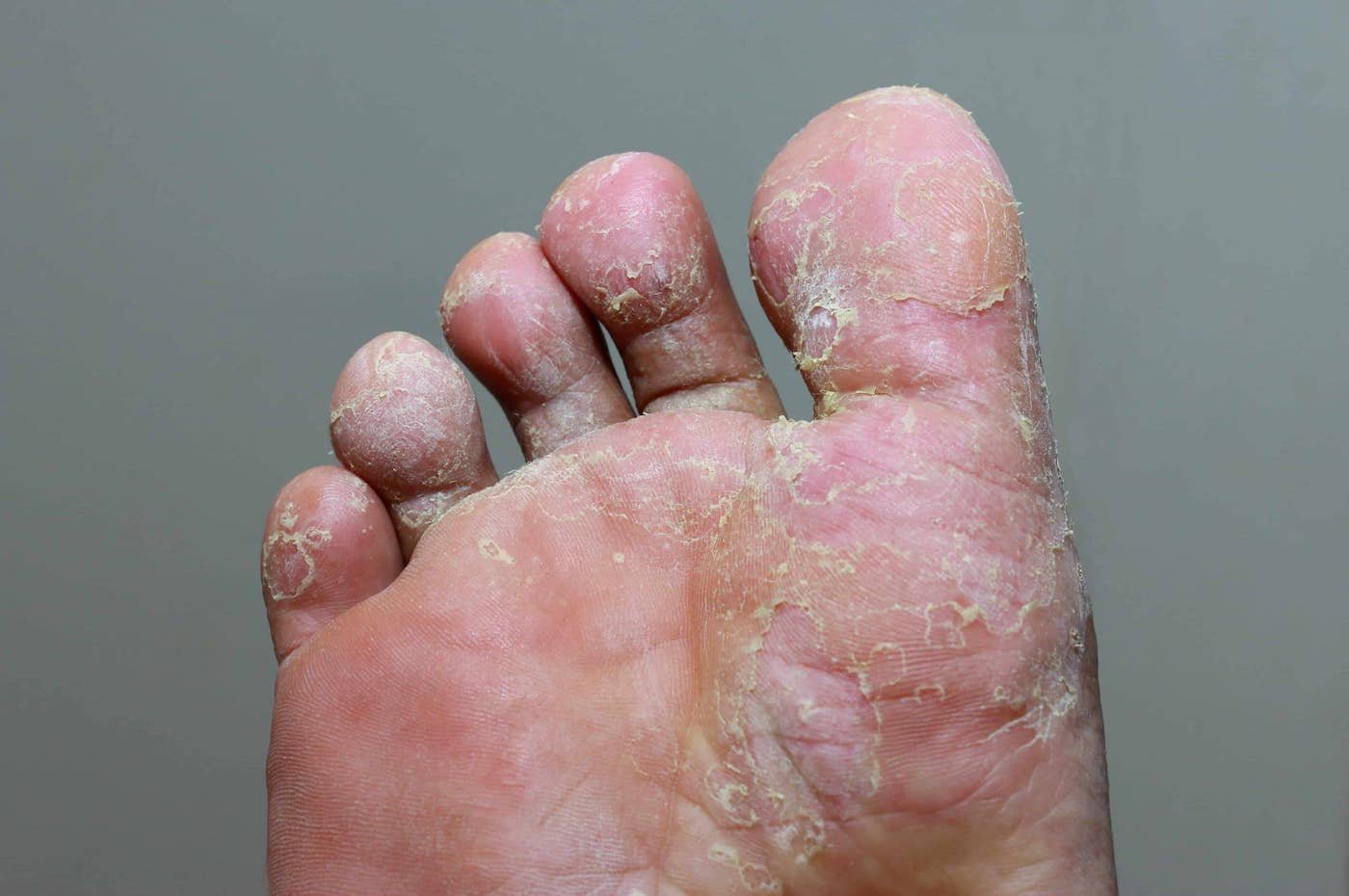
Types of Foot Fungus is a common problem that can start with something as simple as itchy skin between the toes. Before long, the skin may become red, flaky, cracked, or uncomfortable. The good news is that most fungal foot infections can be treated when identified early. Understanding the types of foot fungus can help you recognize what may be happening and know when professional medical advice is needed. Fungal infections can affect the skin, spaces between the toes, soles, and even toenails, and different forms can look quite different from one another.
What Is Foot Fungus?
Foot fungus is a fungal infection that affects the skin or nails of the feet. The most common skin infection is athlete’s foot, medically known as tinea pedis. Fungi thrive in warm, damp environments, which is why sweaty shoes, wet changing rooms, swimming pools, and areas between the toes can provide suitable conditions for growth. Depending on the type and location of the infection, symptoms may include itching, peeling, scaling, redness, burning, blisters, cracks, or changes to the toenails.
What Are the Main Types of Foot Fungus?
The main types include interdigital athlete’s foot, moccasin-type athlete’s foot, vesicular athlete’s foot, and fungal toenail infection. These infections can have overlapping symptoms, but their appearance and location can differ. Some primarily affect the spaces between the toes, while others spread across the soles and sides of the feet. Toenail fungus is another related fungal problem that affects the nail rather than simply the surrounding skin.
1. Interdigital Athlete’s Foot
Interdigital athlete’s foot develops between the toes and is one of the most recognizable forms of tinea pedis. The skin may become itchy, red, cracked, peeling, or unusually soft and white because moisture becomes trapped in the area. It commonly affects the space between the fourth and fifth toes, although other areas can also be involved. Wearing closed shoes for long periods can create a warm, humid environment that encourages fungal growth, particularly when feet become sweaty.
2. Moccasin-Type Athlete’s Foot
Moccasin-type athlete’s foot usually affects the soles and sides of the feet, creating a pattern that can resemble the coverage of a moccasin shoe. Instead of obvious wetness between the toes, the skin may look dry, scaly, and irritated. In some cases, the skin becomes thick or develops painful cracks. This form can be persistent and may affect both feet, making it easy to mistake for ordinary dry skin if other symptoms are mild.
3. Vesicular Athlete’s Foot
Vesicular athlete’s foot is a less common form that can cause small fluid-filled blisters, often appearing on the inner part of the foot, arch, or sole. The blisters may itch, burn, or become uncomfortable when walking. They can sometimes appear suddenly, which may make the condition look different from the typical peeling associated with athlete’s foot. Scratching or breaking the blisters can also irritate the skin and potentially increase the risk of a secondary bacterial infection.
4. Fungal Toenail Infection
Fungal toenail infection, also called onychomycosis, occurs when fungi infect the toenail or the tissue underneath it. The nail may gradually become thicker, discolored, brittle, crumbly, or distorted. Some nails turn yellow, white, or brown, while others may begin separating from the nail bed. Toenail fungus often develops slowly, so people may not notice it until the nail has changed significantly. Treatment can also take longer than treatment for a superficial skin infection because the fungus can be located within the nail.
5. Candida-Related Foot Infection
Candida is a type of yeast that can occasionally cause fungal infections involving the feet. Candida tends to thrive in warm and moist environments, so prolonged moisture around the feet can contribute to its growth. The resulting irritation can resemble other fungal skin infections, particularly around moist areas. Because different infections can look similar, a healthcare professional may need to examine the affected skin or perform testing if the diagnosis is uncertain.
How Does Foot Fungus Usually Start?
Foot fungus often begins when fungal organisms come into contact with the skin and find a warm, damp environment where they can multiply. Sweaty feet, tight or poorly ventilated shoes, damp socks, shared changing-room floors, swimming-pool areas, and communal showers can all provide opportunities for exposure. Small cuts, cracks, or irritated skin may also make it easier for microorganisms to affect the skin. Not everyone exposed to fungi will develop an infection, but keeping feet dry and clean can reduce the conditions that allow fungal growth.
What Are the Common Symptoms?
Symptoms depend on the type of infection and where it develops. Common signs include itching, burning, redness, peeling, scaling, dry skin, cracks, soreness, unpleasant odor, and changes in the appearance of the toenails. Some people have only mild irritation, while others develop painful cracks or blisters. A fungal infection does not always look dramatic at first, which is why persistent itching or unexplained peeling deserves attention rather than being automatically dismissed as dry skin.
How Can You Tell Foot Fungus From Dry Skin?
Dry skin can cause flaking and cracking, but fungal infections often come with additional signs such as persistent itching, redness, scaling in specific patterns, or symptoms concentrated between the toes. Moccasin-type athlete’s foot, for example, can look very similar to ordinary dry skin because it causes widespread scaling on the soles. If moisturizer does not improve the problem or the irritation keeps returning, another condition such as a fungal infection may be involved. Eczema, psoriasis, contact dermatitis, and other skin problems can also resemble fungal infections, so appearance alone is not always enough to identify the cause.
Is Foot Fungus Contagious?
Yes, many fungal foot infections can spread from one person to another. Direct skin contact is one possible route, but fungi can also spread through contaminated surfaces and shared items such as towels, socks, shoes, or footwear used in communal areas. Walking barefoot in damp public environments may increase exposure. Once an infection is present, avoiding shared towels and footwear and keeping the affected area clean and dry can help reduce the chance of spreading it to other people or to another part of the body.
Who Is More Likely to Develop a Fungal Foot Infection?
Anyone can develop foot fungus, but certain conditions make it more likely. People whose feet sweat heavily, those who regularly wear closed shoes, athletes, and people who frequently use communal showers or swimming facilities may have increased exposure. Wearing the same damp footwear repeatedly can also create a favorable environment for fungal growth. People with certain medical conditions or weakened immune defenses may have a greater risk of fungal infections and should seek medical advice if symptoms are persistent or severe.
How Is Foot Fungus Treated?
Treatment depends on the location, severity, and type of infection. Mild athlete’s foot is commonly treated with topical antifungal medicines, which may be available as creams, sprays, powders, or solutions. These medicines work against the fungi responsible for the infection, but they generally need to be used exactly as directed and for the recommended duration. Stopping treatment as soon as symptoms disappear can sometimes allow the infection to return. Toenail infections can be more difficult to treat and may require prescription medication or other medical approaches.
Can Foot Fungus Go Away on Its Own?
Some mild fungal infections may seem to improve temporarily, but persistent foot fungus generally should not be ignored. Symptoms can return or spread if the underlying infection remains. Scratching can also damage the skin and create openings through which bacteria may enter. If an infection does not improve with appropriate treatment, keeps returning, spreads to the nails, or causes significant pain, getting a professional diagnosis is a sensible next step.
How Can You Prevent Foot Fungus?
Keeping feet dry is one of the simplest ways to reduce the conditions fungi prefer. Wash your feet regularly and dry carefully, especially between the toes. Change socks when they become damp, choose breathable footwear when possible, and allow shoes to dry thoroughly between uses. Avoid sharing socks, towels, shoes, or nail-care tools with other people. In communal showers, changing rooms, and pool areas, wearing suitable footwear can also reduce direct contact with potentially contaminated surfaces.
Why Do Some Foot Fungal Infections Keep Coming Back?
Recurring infections can happen when the fungus has not been completely eliminated or when the same conditions that encouraged it remain. Constant moisture, sweaty feet, repeatedly wearing damp shoes, or stopping treatment too early can contribute to recurrence. In some cases, what appears to be recurring fungus may actually be another skin condition. If symptoms repeatedly return despite appropriate treatment, a healthcare professional may need to confirm the diagnosis and determine whether a different treatment is necessary.
When Should You See a Doctor?
Medical advice is particularly important when the infection is severe, spreading, painful, repeatedly returning, or affecting the toenails. You should also seek professional guidance if the skin becomes very swollen, warm, increasingly painful, or produces drainage, as these signs can indicate a bacterial infection or another complication. People with diabetes or conditions that affect circulation or immune function should be especially careful with foot problems and should seek appropriate medical advice rather than relying solely on self-treatment.
Can Foot Fungus Spread to the Toenails?
Yes. Athlete’s foot and fungal toenail infections can occur together, and fungi affecting the skin can potentially reach the nails. A fungal nail infection usually develops gradually, causing changes such as thickening, discoloration, brittleness, or separation from the nail bed. Because nail fungus is often harder to treat than skin fungus, early attention to persistent nail changes can be helpful.
Conclusion
Knowing the different types of foot fungus makes it easier to recognize that not every fungal infection looks the same. Interdigital athlete’s foot often affects the spaces between the toes, moccasin-type infections can cause widespread scaling on the soles, vesicular infections may produce blisters, and fungal nail infections change the appearance and structure of the toenails. The right treatment depends on identifying the actual cause. When symptoms are persistent, unusual, severe, or resistant to treatment, professional evaluation can help prevent a minor foot problem from becoming a longer-term one.
FAQs
What is the most common type of foot fungus?
Athlete’s foot, or tinea pedis, is the most common fungal infection affecting the feet. It can appear between the toes, across the soles, or along the sides of the feet.
What does foot fungus look like?
Foot fungus can cause peeling, scaling, redness, itching, cracking, burning, or blisters. Toenail fungus may cause thickened, discolored, brittle, or distorted nails.
Can foot fungus spread to toenails?
Yes. Fungal infections affecting the skin can also involve the toenails, where the infection may cause gradual changes in nail color, thickness, and texture.
Is foot fungus contagious?
Many fungal foot infections are contagious and can spread through direct contact or contaminated surfaces and personal items such as towels, socks, and footwear.
How long does foot fungus take to clear?
The timeframe varies according to the type and severity of the infection and the treatment used. Skin infections may respond relatively quickly to appropriate antifungal treatment, while toenail infections can take considerably longer.
Read also: Can You Take Dayquil on An Empty Stomach?




One thought on “Types of Foot Fungus Infections, Symptoms, Causes, and Treatment”